2025: A Year in IPR Headlines
Our research and events explored AI’s real-world impacts, maternal health disparities, and pathways to safer, more equitable communities
Get all our news
This year’s stories underscore that policy research is ultimately about people—their safety, their health, their homes, their livelihoods.”
Andrew Papachristos
IPR Director
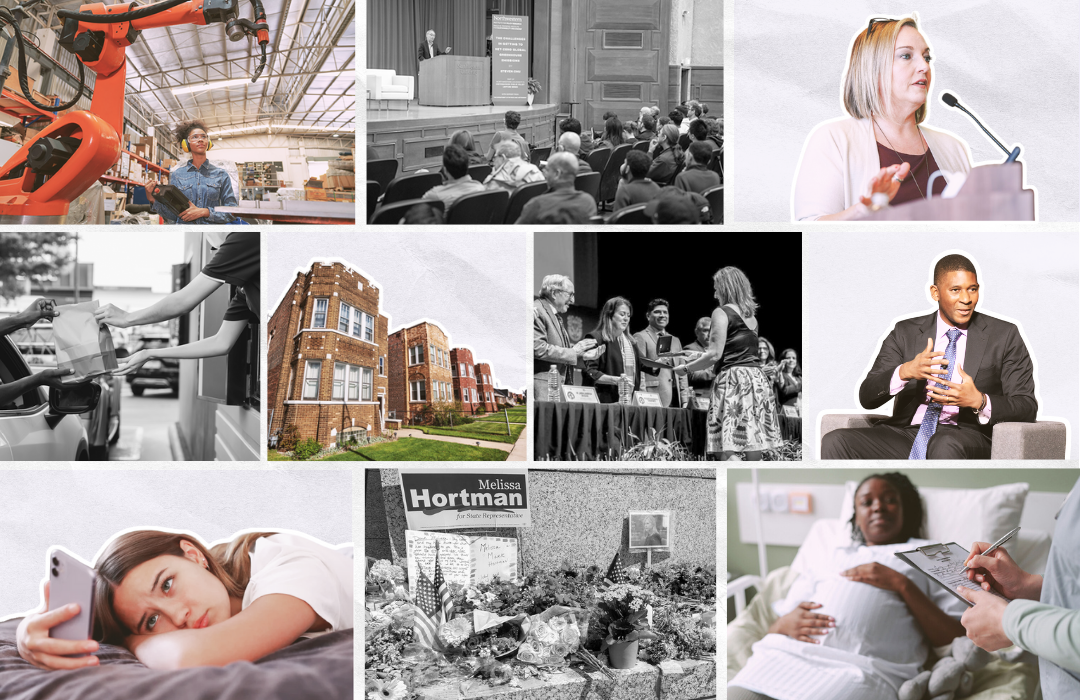
In 2025, IPR researchers tackled some of the year’s most urgent social challenges, from the real-world implications of artificial intelligence (AI) to persistent racial disparities in maternal health. Our faculty also advanced understanding of youth mental health, wage theft, and violence against elected officials.
IPR research continued to shape policy conversations nationwide. This year, our experts informed sentencing reforms, advanced worker-protection efforts, expanded access to clean water, and highlighted effective community violence interventions—bringing rigorous evidence to policymakers and strengthening solutions in communities. We also welcomed leading thinkers to campus for wider conversations around hot-button topics like climate change and housing policy.
“This year’s stories underscore that policy research is ultimately about people—their safety, their health, their homes, their livelihoods,” said IPR Director Andrew Papachristos, the John G. Searle Professor of Sociology. “IPR faculty and visiting experts offered clear analysis of complex issues while keeping the human impact in focus and pointing us toward solutions.”
Technology and a Changing World
The AI Revolution: Hype, Reality, and What Comes Next
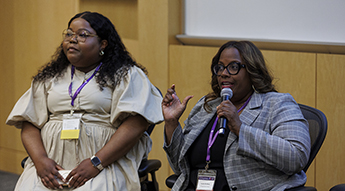
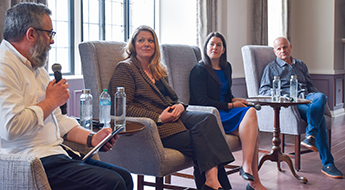
As artificial intelligence (AI) has developed from a far-fetched, futuristic idea to a fact of our daily lives, questions have emerged about the potential impact of this technology. Many are wondering how AI will affect our jobs, creativity, and even the way we understand ourselves. IPR faculty experts Rob Voigt, Jessica Hullman, Hatim Rahman, and V.S. Subrahmanian weigh in on how AI may shape our future.
Turning the Ship of Climate Change
By 2050, over 215 million people will be displaced from their homes and communities due to climate change, according to the World Bank. In a lecture hosted by IPR and the Paula M. Trienens Institute for Sustainability and Energy, Nobel Prize-winning physicist and former U.S. Secretary of Energy Steven Chu outlined the steps needed to achieve net-zero global greenhouse gas emissions and avoid some of climate change’s major consequences.
Efforts to Measure Water Insecurity Scale Up in Mexico and Latin America
In response to the July 2022 extreme drought across Mexico, the Water Insecurity Experiences (WISE) Scales were added to household poverty surveys in one state to get more granular data about future water crises. This information now guides drought responses. As a result, IPR anthropologist Sera Young, who led the development of the WISE Scales, accepted the inaugural and prestigious “Champions of Health” Award on behalf of the WISE Scales from the Director of Mexico’s National Institute of Public Health.
Health and Inequality
The Kids Are Not All Right
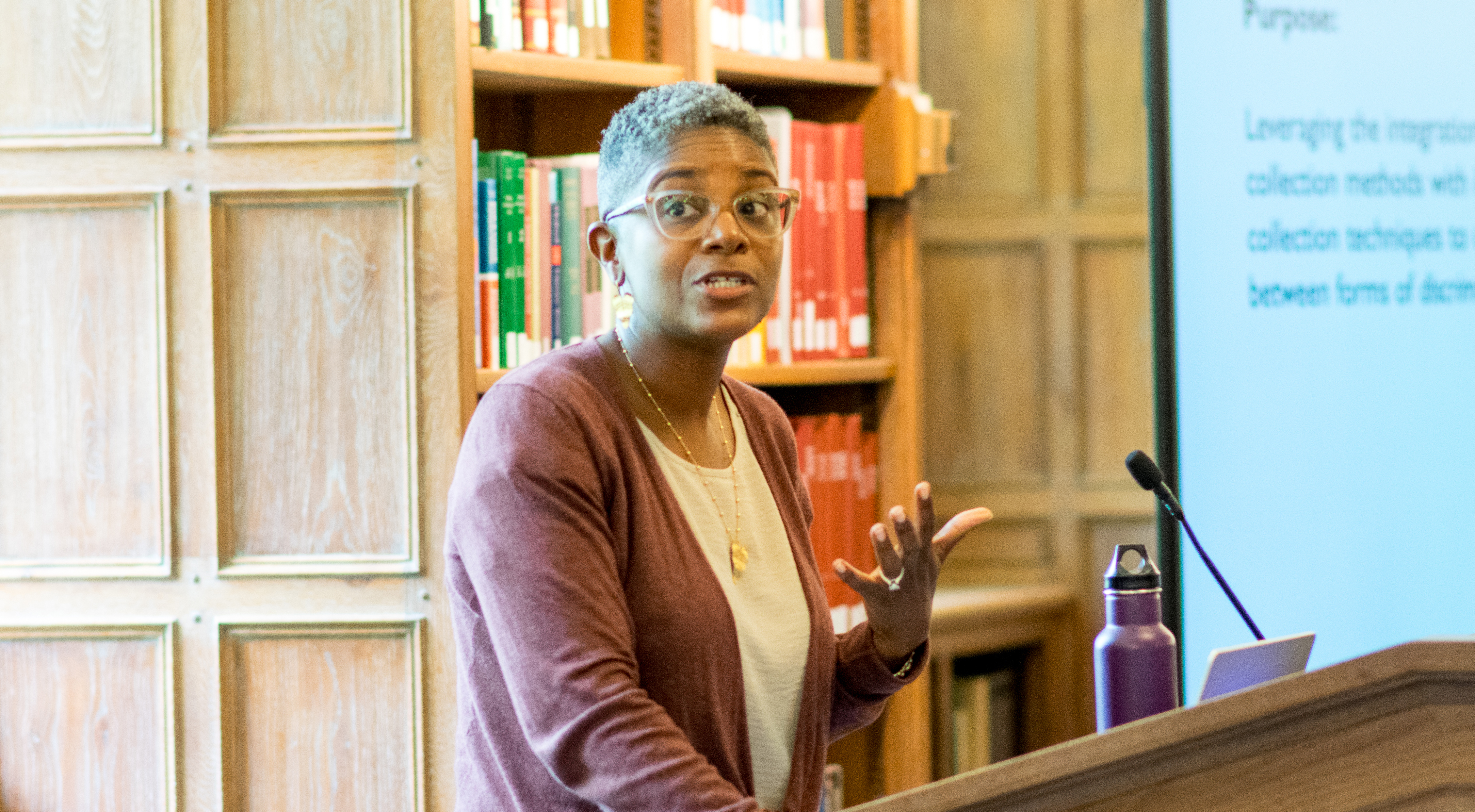
For over a decade, teenagers have struggled with declining mental health. The crisis has been underscored by growing rates of anxiety and depression, emergency room visits for mental health issues, and suicides. IPR faculty experts Sarah Collier Villaume, Emma Adam, Katie Insel, and Ellen Wartella discuss the causes of these alarming trends and how struggling teenagers should be helped.
Why Are Black Women More Likely to Have C-Sections Than White Women?
In the United States, there are stark health disparities between Black and White mothers. Black women are three times more likely to die from a pregnancy-related cause than White women, and Black women are more likely than White women to deliver their babies by C-section. IPR economist Molly Schnell and her colleagues investigate why and how it can be resolved.
Structural Racism in Chicago Is Tied to Premature Births
Black women in the United States are roughly 50% more likely than White women to give birth prematurely. But Black women living in Chicago neighborhoods with discriminatory law enforcement practices and unequal schools were more likely to give birth preterm compared with Black women in neighborhoods without these characteristics. Feinberg assistant professor Alexa Freedman, obstetrician, gynecologist, and IPR associate Ann Borders, IPR health psychologist Greg Miller, and their colleagues explore how racism, not race, can lead to stark differences in outcomes like low birth weight and preterm births.
Policy and Communities
Wage Theft Lifts $44 Million Out of LA Fast-Food Workers’ Pockets Each Year
Instances of wage theft—when employers break the law by not paying their workers for their full hours and benefits—have tripled since 2019 in Los Angeles. Currently, more than 12,000 LA fast-food workers are victims of wage theft, losing more than $44 million in combined wages per year. IPR political scientist Daniel Galvin used government survey data to explore wage theft and possible solutions to this issue.
Homecoming for a Housing Researcher
Johns Hopkins sociologist Stefanie DeLuca, director of the Poverty and Inequality Research Lab at Johns Hopkins University and one of the nation’s leading experts on housing mobility, vouchers, and policy, joined IPR as our inaugural visiting scholar in May 2025. DeLuca received her PhD from Northwestern in 2002 and was an IPR graduate research assistant during her doctoral program.
The Consequences of Violence Against Elected Officials
The assassination of Rep. Melissa Hortman—and other recent attacks, including arson, shootings, and escalating threats against elected officials—underscores a deeply troubling surge in political violence across the country. Political violence is changing the way public officials approach their job, and the public’s reaction. IPR political scientist Laurel Harbridge-Yong and Alexandra Filindra of the University of Illinois Chicago interviewed state and local elected officials and surveyed the public to understand these consequences.
From Northwestern to the White House
IPR economist Kirabo Jackson reflected on his 14 months as a senior member of former President Joe Biden’s Council of Economic Advisers, where he worked on issues ranging from inflation and tax policy to childcare funding and workforce participation. In a January 2025 conversation with IPR Director Andrew Papachristos, Jackson discussed the fast pace of policymaking, the value of clear and accessible communication, and the many ways academic research can shape national policy.
Photo credits (left to right, row by row): iStock; Rob Hart; Jonah Elkowitz; Adobe Stock; iStock; Vanessa Bly; David Johnson; iStock; Flickr/Chad Davis; iStock.
Published: December 11, 2025.