Making Chicago Safer in Heat Waves
Working group co-led by Daniel Horton is mapping vulnerability to build local resilience
Get all our news
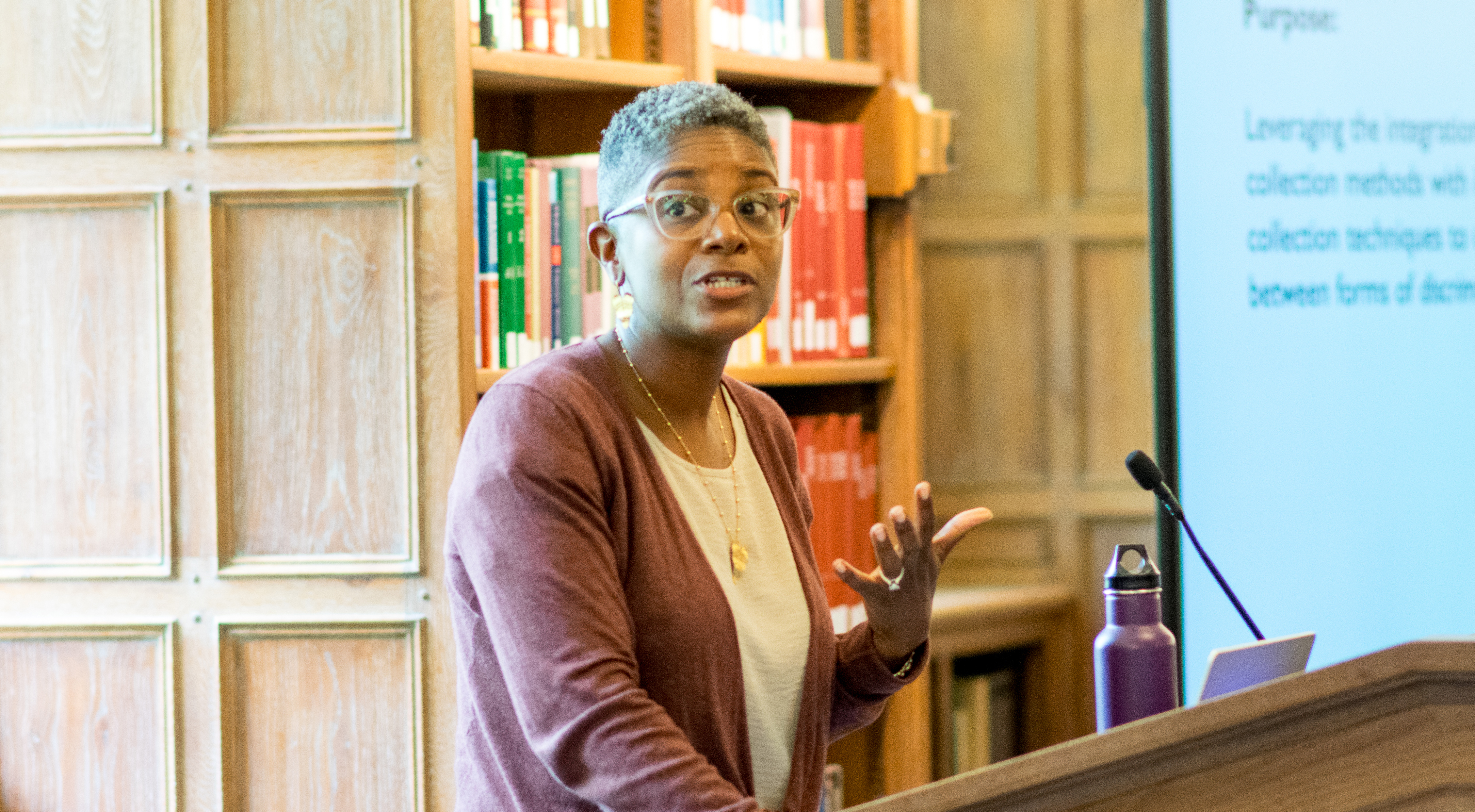
You want to create a tool that the city will use. You want to create a tool that the community will trust. And the only way to do that is to involve the city and community members and bring them along on the ride.”
Daniel Horton
Climate change scholar and IPR associate
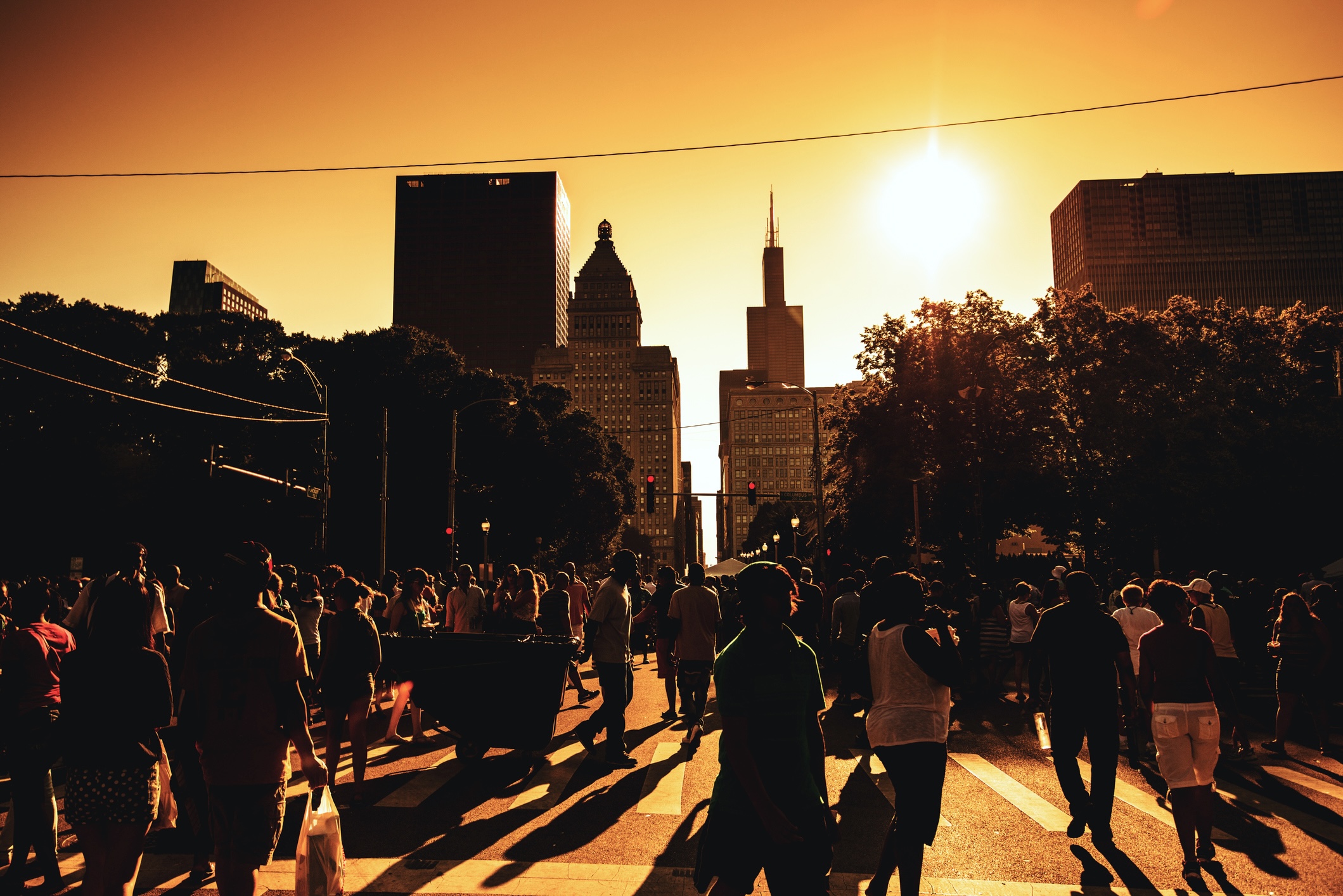
In July 1995, more than 700 people died during a week of unrelenting heat and humidity in Chicago. The event overwhelmed an underfunded public health system, and when morgues filled, county officials resorted to storing bodies in refrigerated trucks.
But the toll wasn’t uniform. On the West Side, two neighborhoods with similar microclimates, income levels, and environmental pollution fared differently that week. North Lawndale was one of the city’s hardest-hit neighborhoods, with 19 deaths attributed to heat. Just blocks south, the neighborhood of Little Village only lost three people to the heat wave. Why?
As sociologist and then-IPR fellow Eric Klinenberg explains in his 2002 book Heat Wave: A Social Autopsy of Disaster in Chicago (University of Chicago Press), North Lawndale’s population had dropped drastically in the decades preceding the heat wave. Little Village had grown. Its bustling streets offered elderly residents, who are particularly vulnerable to extreme heat, more chances to connect with younger neighbors who could help them.
“One of the easiest ways to save lives during heat waves is to knock on your neighbor’s door,” climate change scholar and IPR associate Daniel Horton said. “Socially isolated people died at higher numbers.”
The deadly 1995 heat wave showed how the effects of climate change are distributed unevenly, mediated by social, political, and economic factors.
Tracking a Shifting Risk Landscape
Thirty years later, Horton is leading a team of researchers in assessing who in Chicago is now most vulnerable to climate change and how the city can support them. They are developing the Heat Vulnerability Index (HVI), a spatial data tool that identifies the places and populations most susceptible to the adverse effects of extreme heat.
The HVI is a product of the Defusing Disasters Global Working Group, co-led by Horton. The working group, which now includes members both within and beyond Northwestern, emerged from an idea incubation process at the Roberta Buffett Institute for Global Affairs. Emergency room doctors who joined early discussions pushed for projects connecting health and climate change.
While much has changed since 1995, heat waves remain a significant public health risk, especially as they grow longer and more frequent.
“There are things that have changed in the past 30 years that make Chicago a more resilient city to heat waves. So part of the reason we haven’t seen as many of these mass casualty events is increases in adaptive capacity,” Horton said, citing a marked increase in air conditioning as a key development.
“Another piece of the puzzle is just awareness,” he continued. “And that’s one of the primary things that I think the HVI can contribute—just this idea that heat is incredibly dangerous.”
Tackling Climate Change at the Local Level
With inconsistent national leadership on climate issues, states, counties, cities, and neighborhoods are taking the initiative to adapt to a warming world.
Chicago’s 2022 Climate Action Plan called for the creation of a heat vulnerability index to guide public health planning. When Raed Mansour, then-director of environmental innovation at the Chicago Department of Public Health, joined Northwestern’s working group, he championed the idea.
The effort began in 2023 with Heat Watch Chicago, in which residents helped collect hyperlocal outdoor temperature and humidity data. The working group has been analyzing the findings and synthesizing them with public health data to finalize the HVI. They are weighing more than 40 variables, from infrastructure gaps to income levels to historic death and hospitalization rates.
The HVI seeks to provide city policymakers and health officials with the insights needed to prioritize interventions and allocate life-saving resources to the areas that need them most. The working group members in city government were clear that they wanted solutions—not just a list of problems.
“When we had that conversation, our mandate changed from just creating this tool to also providing policy recommendations,” Horton recalled.
The group launched a public survey in the summer of 2025 listing 30 heat adaptation measures for residents to rank, such as weatherizing buildings, providing mobile cooling units, and adding more tree for shade.
Engaging Residents for Lasting Impact
Horton emphasizes that technical expertise alone is not enough.
“There are other Chicago HVIs that have been published in the literature, but they’re not used,” he said. “And that’s the trick, right? You want to create a tool that the city will use. You want to create a tool that the community will trust. And the only way to do that is to involve the city and community members and bring them along on the ride.”
The group is a diverse coalition with an equitable decision-making process. Its governance board includes academics, city leaders, and community organizations like People for Community Recovery, Mi Villita Neighbors, Grow Greater Englewood, and Elevate.
They are leading community engagement efforts to ensure qualitative insights from residents inform the HVI design. A photovoice project, for example, asked resident to submit photos and text that capture their experiences dealing with extreme heat, then discuss them in groups.
The working group operates under “the philosophy that everybody has an equal say, and we respect people’s opinions equally, and an academic’s knowledge is equally as good as someone’s lived-experience knowledge,” Horton said.
Residents have provided crucial local knowledge to help researchers refine the variables used in the index, such as pointing out the importance of water features in parks in addition to formal cooling centers.
A key community priority is combating the social isolation that proved so deadly in 1995 through wellness checks and neighborhood alert systems. Residents have also advocated for shade and water at bus stops, stronger worker protections, enforcement of utility-shutoff bans, and more trees.
An immediate, tangible outcome of the working group’s efforts was the city’s decision to keep public swimming pools open longer in some neighborhoods—a change officials attributed to the HVI.
Horton said it was a small but satisfying step that gave Chicago families a few more weeks of joy—and relief from the heat. “That was super cool,” he said.
Published: December 12, 2025.