What Does America Owe Its Citizens?
An IPR economist’s framework explores what Americans may mean when they talk about the common good
Get all our news
Everyone could be for equity, but what do you mean by equity? Five different people mean five different things, and they just use the word, but they don’t clarify it.”
Charles F. Manski
IPR economist
As the United States approaches the 250th anniversary of its founding this July, Americans find themselves in familiar arguments about fairness, opportunity, and what the country owes its citizens. Concepts like equity, equality, and the greater good come up frequently—but often without being defined.
According to IPR economist Charles F. Manski, that is precisely the problem.
“Everyone could be for equity,” Manski said, “but what do you mean by equity? Five different people mean five different things, and they just use the word, but they don’t clarify it.”
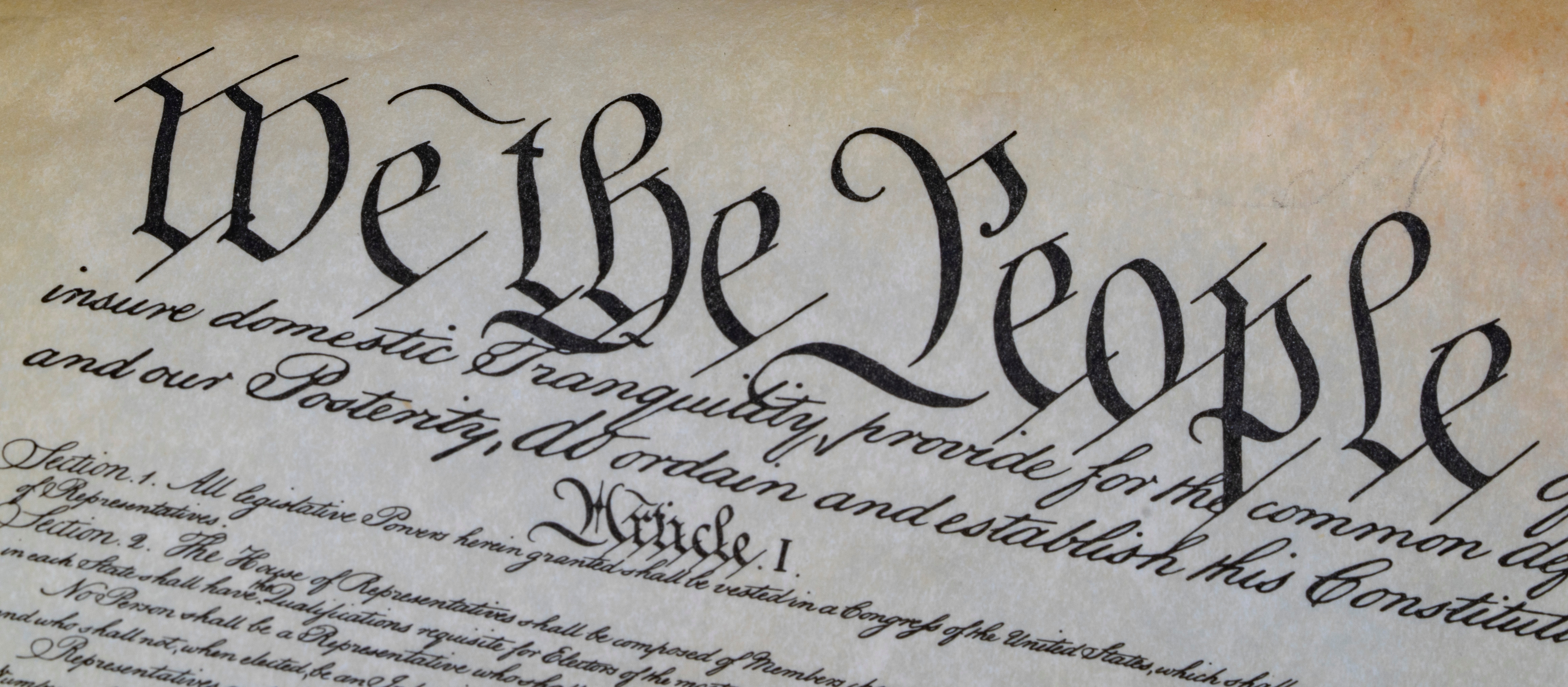
Manski, the Board of Trustees Professor in Economics, has spent decades building rigorous mathematical frameworks for ideas that politicians and citizens debate but rarely define. His new article targets a phrase that appears twice in the Constitution, “the general Welfare.”
The framers listed “the general Welfare” as one of the goals of establishing a constitution and as a justification for the federal government’s power to levy taxes. Yet they never defined it, and Congress and the Supreme Court have done little since to clarify what it means. The phrase, in Manski’s words, “has rhetorical appeal, but it lacks substance.”
Making Order from Chaos
Manski is no stranger to the challenges of vagueness. His career has been animated by a deep skepticism of what he calls “incredible certitude,” the tendency of economists and policymakers to state conclusions more confidently than their evidence warrants.
The BBVA Foundation recently described Manski as the “critical conscience of measurement in the social sciences.” One of his major contributions to the field—the theory of partial identification—gives researchers formal tools to acknowledge and quantify uncertainty, rather than masking it with assumptions.
That same rigor now shapes his work on welfare economics. Manski advocates for using social welfare functions, mathematical constructs that define, with precision, what society is trying to accomplish.
“Math is a cleaner language,” Manski explained. “It doesn't have the subtleties of verbal language, but it is much more precise, and it helps.”
That precision can reveal contradictions hidden in everyday political language.
One tension Manski highlights is the difference between “complete equality”—treating all individuals equally—and “intergroup equality,” meaning equality between demographic groups such as racial or gender groups. In public debate, these goals are often treated as interchangeable. Manski’s work shows they are not.
“You can have racial equality with enormous within-group inequality,” Manski said. A society could close the gap in average outcomes between racial groups entirely while individual inequality—say, between the rich and the poor of every racial group—remains extreme.
According to Manski, much of contemporary American policy debate—in arenas like education, healthcare, and criminal justice—conflates these two goals, arguing for one while implicitly assuming it delivers the other. Manski’s framework shows when and why that assumption can fail.
Accounting for Altruism
Manski’s article also complicates a conventional assumption in economics—that people act primarily out of self-interest.
He argues that people may hold what he calls “distributional preferences”: They care about fairness and may be willing to sacrifice some personal gain to create a more equitable society.
Yet even equity-minded people tend to behave in self-interested ways in daily life—not because they are hypocrites, but because they see few options for changing the world on their own.
“I’d like to make both myself better off and society better off, but I can’t do anything about society because there’s 350 million people and I’m just one of them,” Manski said, summarizing the logic that emerges from the models.
That calculus shifts, however, when people think not as individuals, but as citizens or voters making decisions in “social planner” mode. Someone who pursues their own interests in everyday life may still support redistributive policies at the ballot box.
If economists assume people care only about themselves, the policies they design may maximize wealth while ignoring what many people actually value—the “general Welfare.” Formal models make that interest in fairness harder to overlook.
The Role of Economists
Despite the moral implications of his work, Manski is careful about the role he believes economists should play.
“We’re not the religious leaders,” he said. “We’re not the moral philosophers who are supposed to tell society what to do.”
Instead, he sees economists more as engineers: Once society identifies its values and goals, economists can help determine the most effective ways to pursue them.
As the nation marks 250 years of attempting to form a more perfect union, Manski’s work offers something the founders themselves did not have: a systematic way to define what the “general Welfare” actually means—and to test whether policies intended to advance it truly do.
What constitutes the general welfare, it turns out, may not be self-evident. But Manski believes it can at least be made clearer.
Charles F. Manski is the Board of Trustees Professor in Economics and an IPR fellow.
Photo credit: Adobe Stock
Published: May 27, 2026.