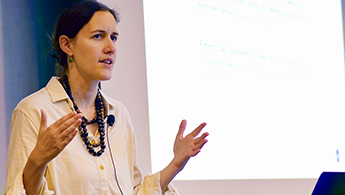
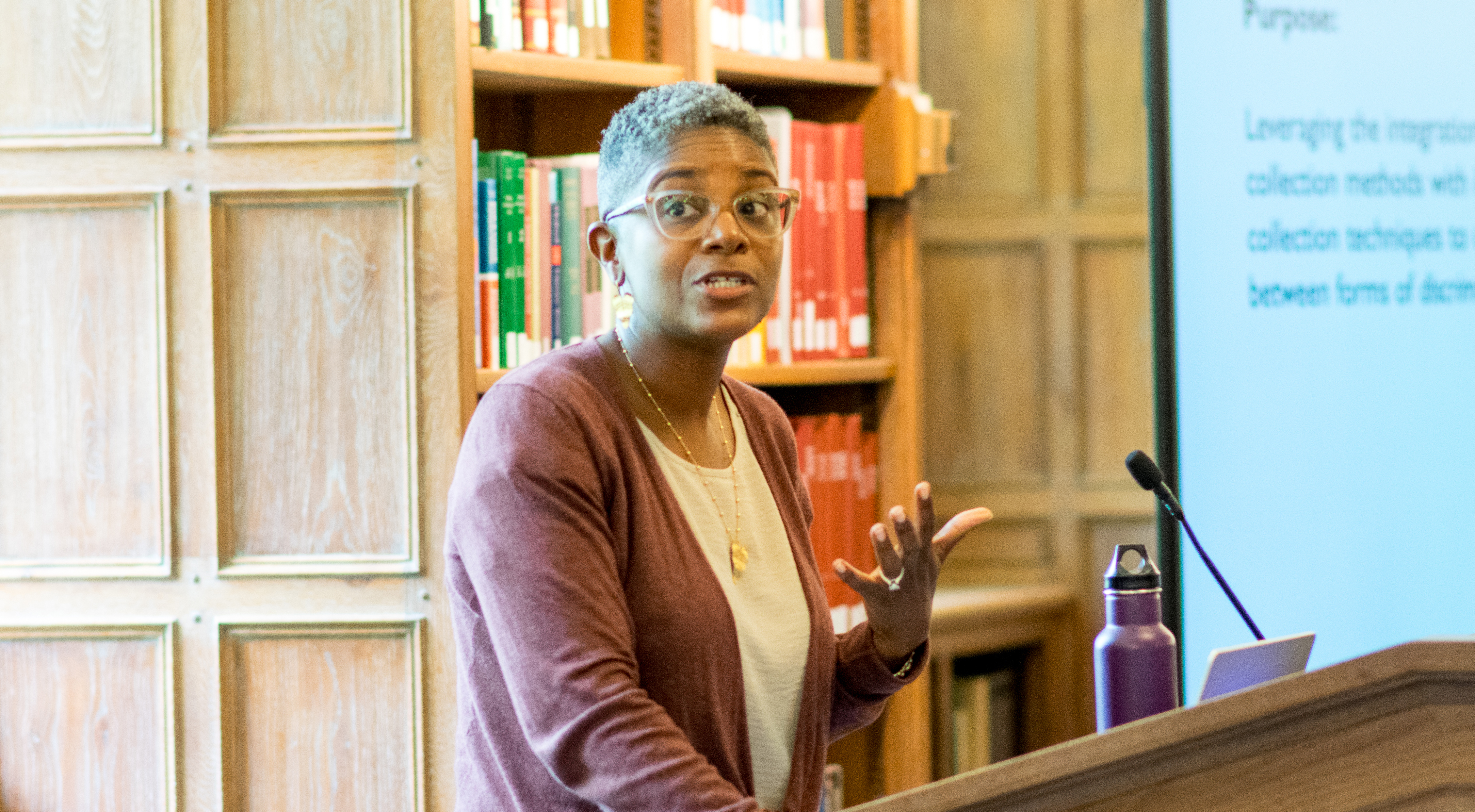
Terri Sabol delivers opening remarks at the EC*REACH conference.
A New Era for Early Childhood in Illinois
EC*REACH conference showcases new research and Illinois’ new early childhood department
August 7, 2026
Get all our news
At EC*REACH, we accelerate knowledge and build partnerships to strengthen the early childhood ecosystem in the city. And that is exactly what we all did today.”
Terri Sabol
IPR developmental psychologist
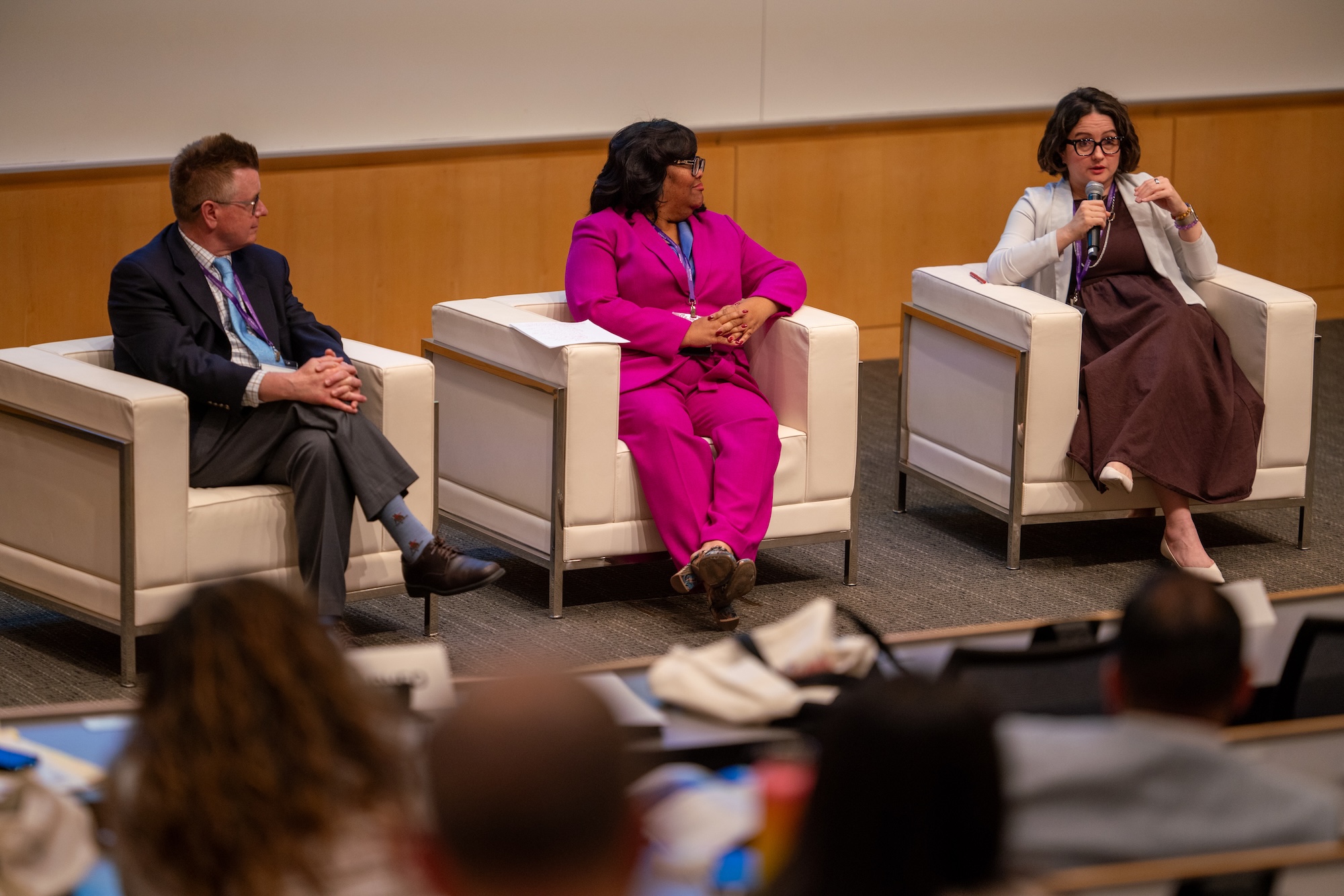
EC*REACH board chair Matt Stagner moderates a Q&A session with Angela Green and
Teresa Ramos (left to right) on early childhood policy in Chicago and Illinois.
Key Takeaways
- EC*REACH marks a milestone: The research alliance's second annual conference drew nearly 300 researchers, providers and policymakers to Chicago and included keynotes by Teresa Ramos, Secretary of the Illinois Department of Early Childhood (IDEC), and Angela Green, Commissioner of the Chicago Department of Family and Support Services (DFSS).
- A fragmented system, unified: IDEC now brings the state's childcare programs, funding and licensing under one department, and Ramos said it will share research-ready data with partners like EC*REACH.
- From research to daily life: Journalist Paul Tough traced how "noncognitive" skills grow out of children's everyday relationships, and pressed conference-goers on how to turn that research into practice and policy.
- "Childhood is sacred": Commissioner Green described the early childhood workforce's toughest years in decades, from the pandemic to immigration enforcement, and called for shared investment in the field's future.
With its launch in 2023, the Early Childhood Research Alliance of Chicago (EC*REACH) aimed to bring together a widespread community around early childhood education priorities and research. Its second annual conference on June 25 brought together nearly 300 researchers, practitioners, policymakers, community leaders, and advocates. The EC*REACH conference also highlighted a key new player in this space, the newly formed Illinois Department of Early Childhood (IDEC). The department brings the state’s most prominent childhood programs under one roof, giving children, families, and educators better access to the support they need to succeed.
Convening Chicago’s Early Childhood Community
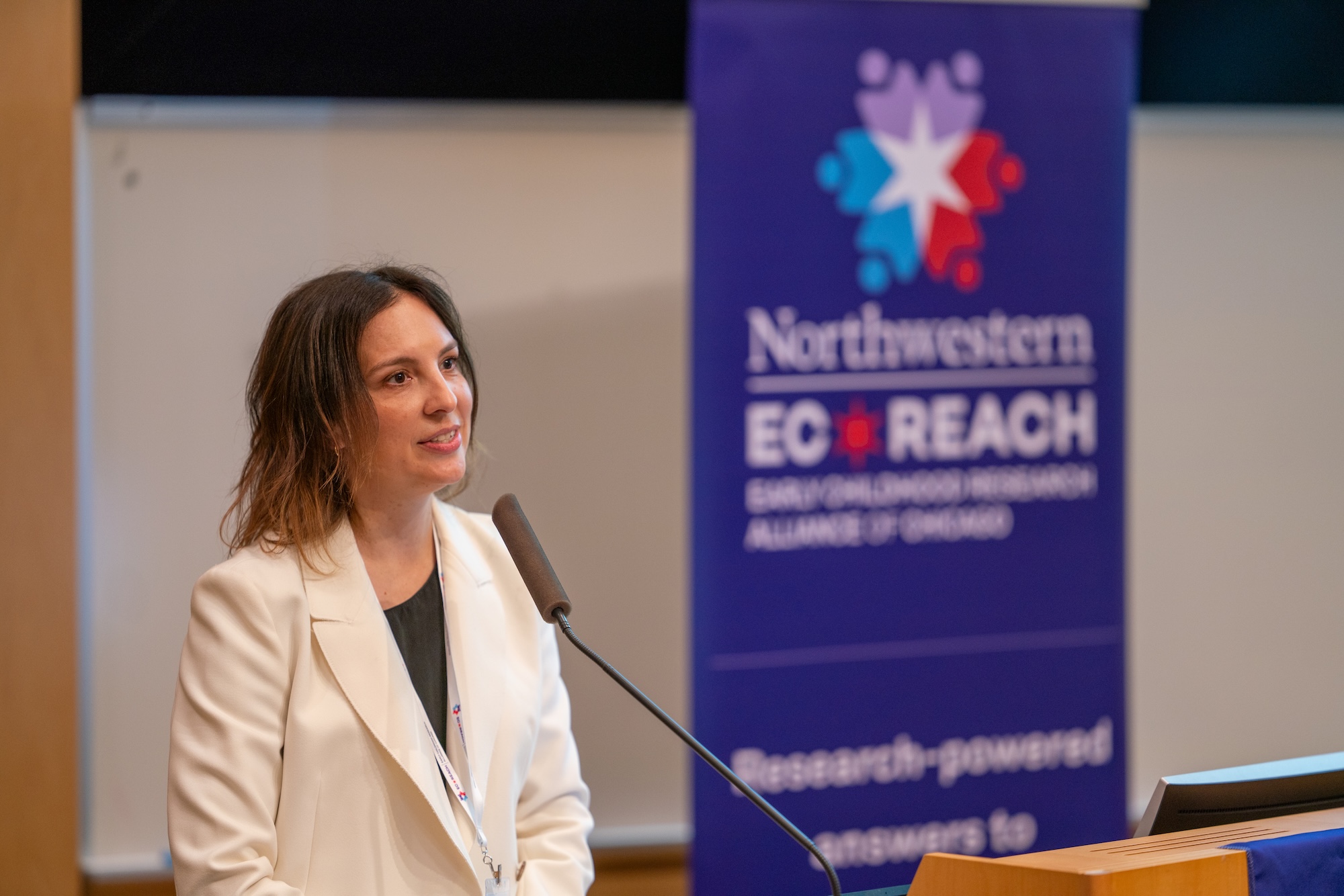
EC*REACH, the conference organizers, serve as Chicago's only research alliance dedicated to early childhood.
Housed at Northwestern University's Institute for Policy Research (IPR), the alliance is led by faculty co-directors Terri Sabol and Diane Whitmore Schanzenbach, deputy director Michelle Bezark, and senior researcher and advisor John Q. Easton. Partner engagement manager Jordan Herron led the organization of the conference.
The group brings together researchers, families, city and community leaders, and providers around three goals: Conducting rigorous research, harnessing existing data, and connecting people across Chicago's early childhood system.
“At EC*REACH, we accelerate knowledge and build partnerships to strengthen the early childhood ecosystem in the city,” Sabol said during her closing remarks at the conference. “And that is exactly what we all did today.”
The conference opened with a keynote from journalist and author Paul Tough, whose book “How Children Succeed” explores how childhood adversity shapes long-term outcomes, followed by the afternoon's keynotes from IDEC Secretary Teresa Ramos and Chicago Department of Family and Support Services (DFSS) Commissioner Angela Green. The conference also featured interactive panels on supporting immigrant families and using artificial intelligence and data to shape the field's future, among others.
Uniting a Fragmented System
Ramos previewed IDEC—which launched on July 1—in her keynote address at the conference. Ramos described it as an opportunity to “take on the complexity and burden” that families and providers currently shoulder.
“It’s too complicated. It’s too difficult to manage,” Ramos said. “Providers are spending more time on bureaucracy than they are spending with children and families.”
IDEC brings together childcare programs, preschool and early childhood block grant funding, and childcare licensing and licensing exemptions, which were once spread across three state agencies.
The roughly two-year effort moved 385 staff, more than $4.3 billion in funding, and thousands of processes into one department. Illinois is the latest state to establish a department for early childhood since 2020, joining Colorado, New Mexico, and Oregon.
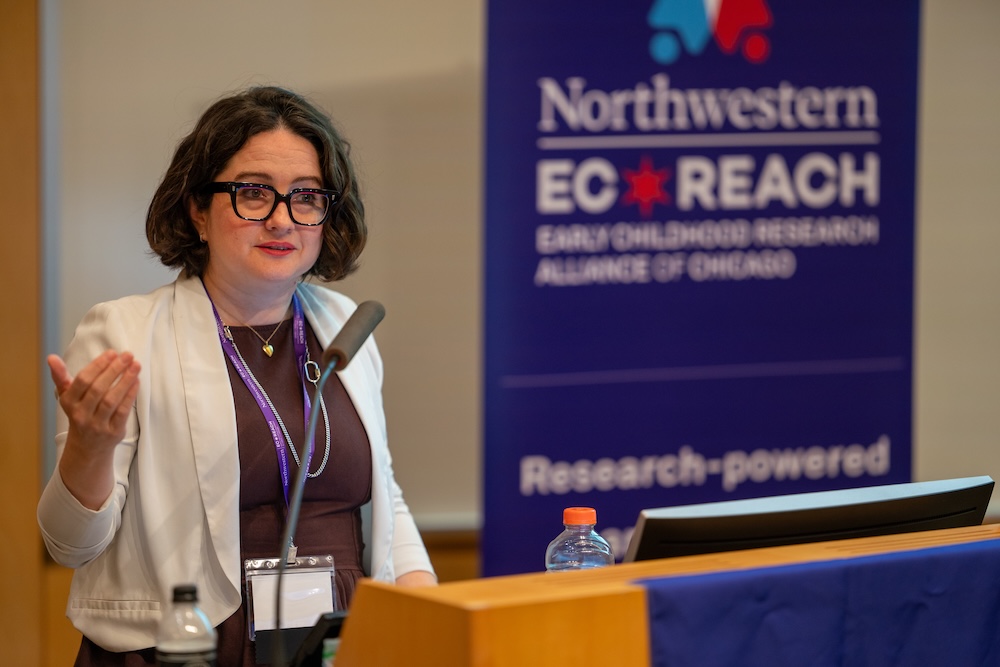
Teresa Ramos previewed the new department, IDEC.
Each of the three Illinois agencies—the Department of Human Services, the State Board of Education, and the Department of Children and Family Services—“collected different data” and “asked different questions.” They didn’t speak “the same language,” Ramos explained. That lack of coordination, she said, kept the state from answering basic questions, such as: How are the children doing? How are the providers that are serving them doing?
To change that, Ramos said the new department built a data hub with billions of records and a single, unduplicated record for each child, family, and provider, so Illinois can track outcomes over time and target resources to close equity gaps.
She also emphasized that IDEC is set to share “research-ready” anonymized, linked data with partners, giving researchers and communities a clearer picture of how early childhood services are working—and where they are falling short—across the state.
IDEC will make sure that “for every dollar we have, we’re spending it in a way that protects children and families, supports our workforce as brain builders, and drives us to be the best state,” Ramos said.
Together, those changes open new doors for researchers and local partners who want to use evidence to guide policy.
“EC*REACH was established to strengthen the connections among research and policy in early childhood. The launch of IDEC creates new opportunities for partnership by bringing programs and data together within a single department,” Sabol said.
“We are excited about the potential to generate evidence that can inform decision-making and improve outcomes for young children and their families across Chicago and Illinois,” Sabol added.
From Data to Daily Life
In his keynote, Tough traced how Chicago’s researchers and programs shaped his understanding of early childhood. He highlighted research showing that so‑called “noncognitive” skills—perseverance, self-control, emotional stability—grow out of children’s everyday environments and relationships, especially secure bonds with caregivers.
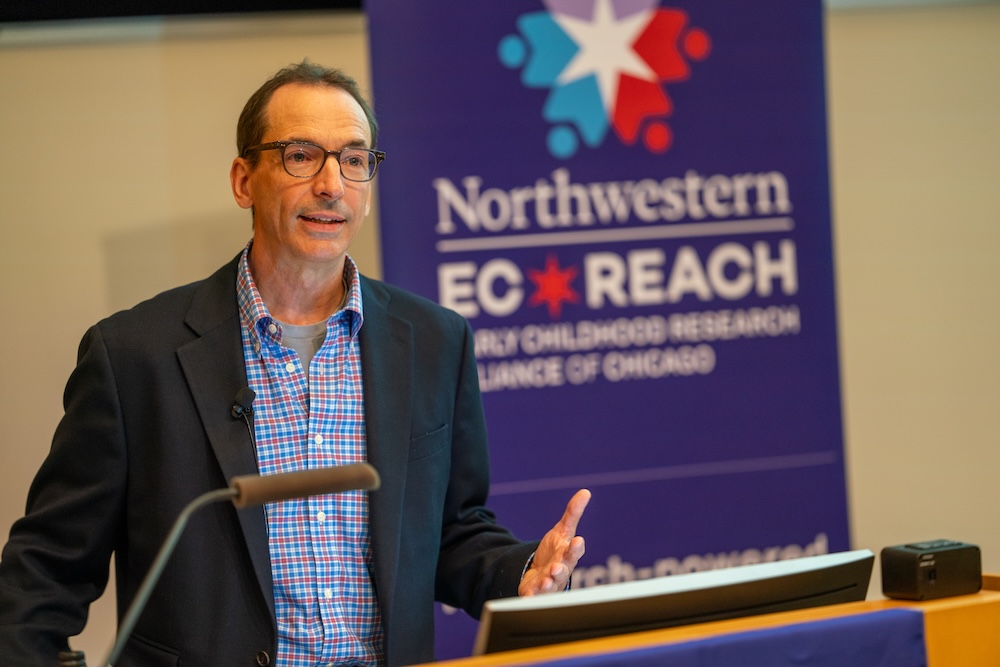
Paul Tough asked how data can be used to change behavior.
Tough recalled spending his early days of parenting reading neuroscience journal articles before “rolling around with [his son] on the living room rug and making his stuffed animals talk.”
He stressed that the real work happens in these ordinary routines at home—moments of connection, stress, and discipline that quietly build (or erode) children’s foundations—and argued that the central challenge is carrying that insight into policy and practice.
“How do we translate good research into good practice and good policy?” Tough asked. “How do we use data to change behavior, whether it’s the behavior of parents or the behavior of presidents?”
A moderated panel following his talk explored these questions in the Chicago context, highlighting the role research-practice partnerships like EC*REACH play in tackling them.
‘Childhood Is Sacred’
Conference goers also heard about Chicago’s early childhood system from Commissioner Green. Anchored in DFSS, the system funds a network of community-based organizations, serving children and families from birth to age five, as well as expectant parents, through programs like Head Start and Preschool for All.
“Childhood is sacred,” Green said. “Children only get to be a child once, and the experiences they have during those earliest years really shape how they see themselves, how they relate to others, and how they believe in what is possible for their future.”
Green said the current early childhood workforce challenges are “among the most significant” she’s seen in decades, citing workforce shortages, funding uncertainty, rising operating costs, and increasing demands on educators and providers.
Over the past five and a half years, she said, the early childhood workforce has navigated the COVID-19 pandemic, federal funding freezes, and immigration enforcement actions that touched families and educators directly. This included instances where parents were detained after dropping off their children, leaving providers to care for kids whose “worlds have been suddenly turned upside down.”
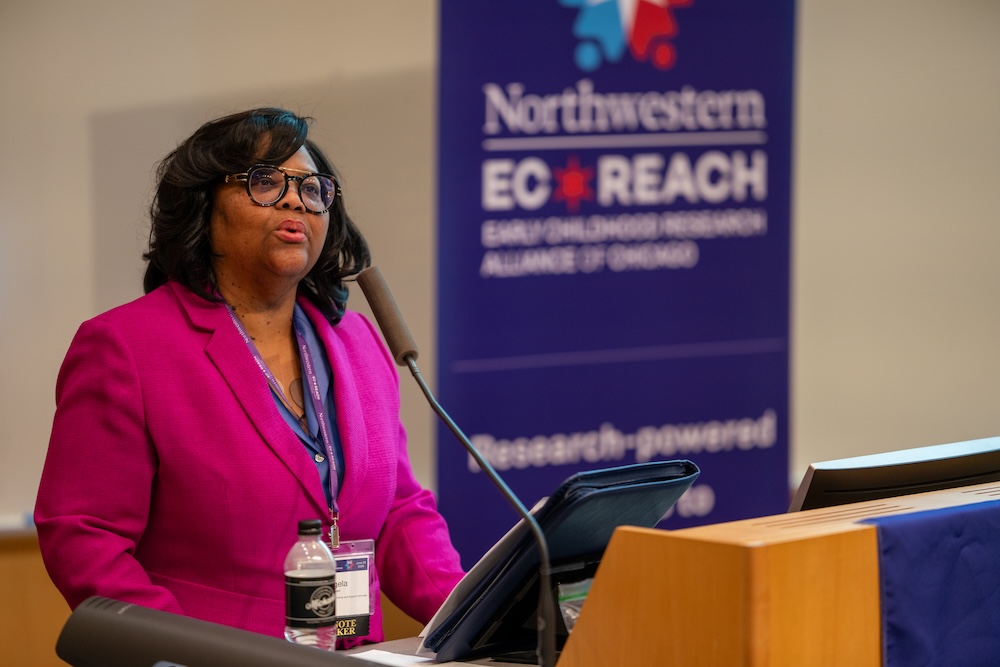
Angela Green delivers remarks on Chicago's early childhood system.
One of the most pressing issues facing the field, she said, is worker compensation. She pointed to Mayor Brandon Johnson's $7 million investment in pay parity for early learning providers, aimed at creating a more equitable wage structure across the city's early learning system.
Her vision for DFSS is to go beyond its role as a funder and be a strategic partner, systems leader, and champion for children, families, and providers.
“The future of early childhood education will not be shaped by any one institution, agency, or sector,” Green said. “It will be shaped by all of us, all of us working together to build a system worthy of our children, and that is why gatherings like this matter.”
Angela Green is commissioner of the Chicago Department of Family and Support Services. Teresa Ramos is secretary of the Illinois Department of Early Childhood. Terri Sabol is an associate professor of human development and social policy and an IPR fellow. Diane Whitmore Schanzenbach is the McCourt Chair at Georgetown University’s McCourt School of Public Policy and an IPR faculty adjunct. John Q. Easton is a senior advisor and researcher for EC*REACH. Michelle Bezark is deputy director for EC*REACH. Jordan Herron is partner engagement manager at EC*REACH.
Photo credits: Rob Hart
Published: August 7, 2026.