Prosecutor Politics
Chika Okafor’s research shows how district attorney elections drove up prison admissions and sentence lengths
Get all our news
It's not just about policy, but about politics, and about our own part in interrogating what we are really looking for and what we want when it comes to those who are accused of committing crimes.”
Chika Okafor
IPR economist and legal scholar
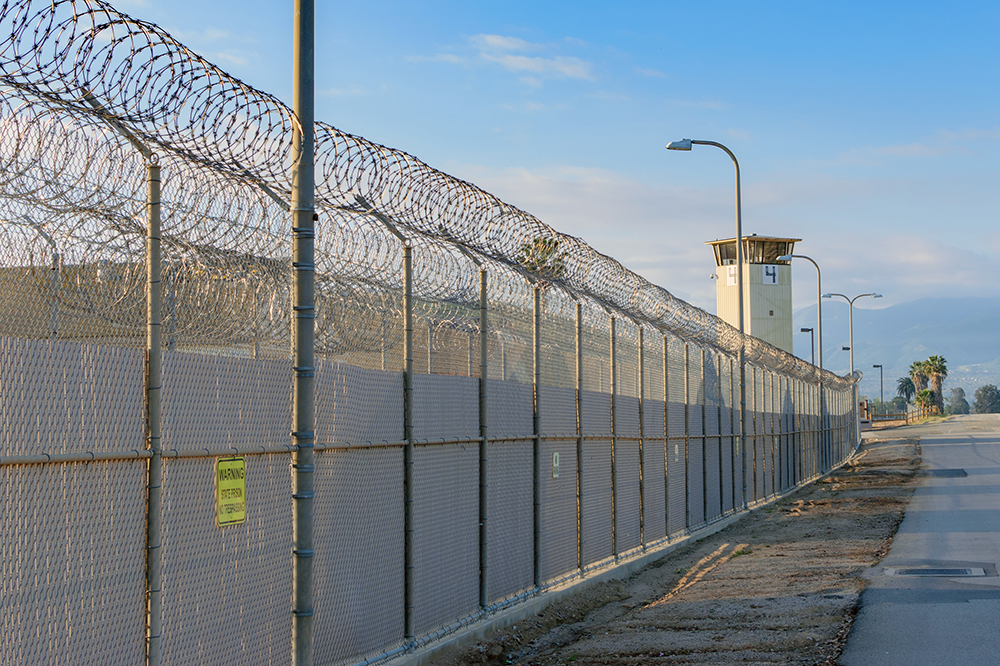
The United States incarcerates more people than any nation in the world, according to internationally available data. Today’s mass incarceration can be tracked back to the 1970s, when President Richard Nixon's “law and order” agenda and “tough on crime” messaging resonated with a public anxious about crime and social unrest. That shift ushered in harsher sentencing policies, expanded policing powers, and the modern War on Drugs.
But how did those political pressures shape the decisions of the officials who determine who gets charged, convicted, and sent to prison?
During the steepest rise in U.S. incarceration, prison admissions rose about 3% in years when district attorneys stood for election, according to new research published in the Journal of Public Economics by IPR economist and legal scholar Chika Okafor. He found that from roughly 1986 to 2006, this amounted to some 63,000 additional prison admissions.
“District attorneys are considered by many to be the most influential actors in the U.S. criminal justice system,” Okafor said. “They have often unfettered authority over who gets charged for crimes and what crimes they're charged with.”
Drawing on the timing of district attorney elections across nearly 40 states, Okafor found that prison admissions rose along with the total months people were sentenced to serve. His research provides evidence these results are not due to other elections—judicial, mayoral, sheriff; the spike tracks specifically with district attorney races.
The increases showed up mostly in less serious, non-violent cases rather than violent crimes—a result Okafor called one of his most surprising.
“I think for high-profile murders, the behavior is going to be kind of agnostic to where you are in the election cycle, perhaps in part because folks will remember it more readily,” Okafor said.
The study compares election years directly against non-election years. However, Okafor noted it does not capture how the broader "tough-on-crime" climate may have shaped incarceration throughout a prosecutor's entire term, not just around elections. Political pressures exist continuously, he said, suggesting the 63,000 figure may understate the era's total effect.
The effects were stronger in south-central states, including Arkansas, Oklahoma, Texas, and Mississippi, and tracked local politics closely. The more consistently a county voted Republican across the presidential elections from 1980 to 2016, the bigger the election-year increase in admissions and sentence lengths. Counties judged only by their most recent vote showed a weaker link, suggesting that durable local political leanings, not the outcome of any single election, are what shape prosecutors’ behavior.
Overall, the findings suggest that political incentives and voter expectations shaped district attorney behavior during that period. According to Okafor, the effect diminished as public attitudes toward punishment softened and the tough-on-crime era ended.
The study looks at a period more than 20 years ago. But Okafor says its lessons about voters and elected officials still apply, especially with the 2026 midterms approaching. The broader point, Okafor said, is the suggested role that public opinion plays when it comes to some of the most influential actors that guide our society.
“There's a lot of weight and gravity associated with the implications of our individual votes—both when it comes to the individuals who ultimately get elected, but also when it comes to the political incentives for those who weren't even on the ballot,” Okafor said. “The fact that public perception, public opinion, and voter preferences do matter is particularly relevant and salient given the current political landscape that we find ourselves in.”
Most criminal justice reforms have focused on policy fixes—things like eliminating cash bail or revising three-strikes laws. However, Okafor said the study reveals that shifting public attitudes toward punishment and individuals inside the legal system can be an equally vital, transformative approach to addressing the country's exceptionally high incarceration rates.
“It's not just about policy, but about politics, and about our own part in interrogating what we are really looking for and what we want when it comes to those who are accused of committing crimes,” Okafor said.
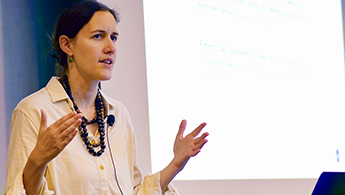
Chika Okafor is assistant professor of law and an IPR fellow.
Photo credit: iStock / Tim Gray
Published: September 18, 2026.