SURA 2026 Student Blog
Get all our news
Each summer since 1998, the Institute for Policy Research (IPR) has run the Summer Undergraduate Research Assistants (SURA) program, which gives undergraduate students first-hand experience in the conceptualization and conduct of policy-relevant social science research. In a series of blog posts this fall, SURA students are sharing their summer research experience from their own perspective
Shaili Das: Exploring the Links Between Financial Security, Housing, and Health
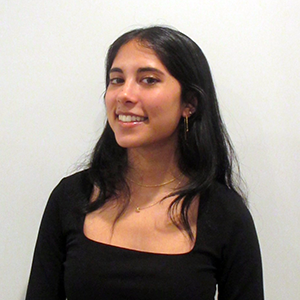
Shaili Das worked with IPR health psychologists Edith Chen and Greg Miller to investigate how economic stability and housing assistance affect physical and mental health.
This summer, through IPR’s Summer Undergraduate Research Assistant (SURA) program, I have had the privilege of working with Dr. Greg Miller and Dr. Edith Chen at the Foundations of Health Research Center (FHRC) by supporting operations for the Every Dollar Counts and Connections studies. The Every Dollar Counts study examines the multifaceted effects of economic stability on participants' physical and mental health, while the Connections study similarly investigates the effects of government housing programs and assistance agencies such as Connections for the Homeless. This changemaking research is particularly relevant as healthcare professionals and policymakers work to better understand the social determinants of health and recognize that socioeconomic circumstances are deeply intertwined with immediate and long-term wellbeing. The findings from these studies can help inform public policies and interventions that address the root causes of health disparities.
My experience at FHRC has allowed me to apply what I have learned in my biology and laboratory courses to real-world research. As a wet lab research assistant, I process participant blood samples and conduct analyses such as flow cytometry. These responsibilities have strengthened my technical skills while teaching me the importance of precision, sterility, and attention to detail. Beyond the laboratory, attending meetings and learning from peers and faculty members has exposed me to perspectives that have broadened my understanding of collaborative research.
Among the most important lessons I have learned is adaptability. When working with human participants, we frequently encounter unexpected challenges. For example, participants may cancel unexpectedly, or blood collection may be unsuccessful due to difficulty finding veins or needle anxiety. These experiences have taught me that there is always a solution to be found, and that working jointly with participants and within the lab is essential to determining what can be done.
This experience has also reaffirmed the importance of humility for me. There is a steep learning curve in wet lab research, and recognizing when to seek guidance has been essential to my growth. I am grateful to be surrounded by knowledgeable and supportive mentors who have encouraged me to ask questions, learn from mistakes, and continually improve. Ultimately, this inspiring experience has further invigorated my commitment to multidisciplinary research that advances health equity and translates scientific findings into meaningful improvements in people's lives.
Shaili Das is a third-year student from the Chicago suburbs studying biological sciences and psychology. She has an interest in public health with a focus on healthcare inequities and trauma-informed care, and has previously supported research regarding the effect of chronic stress on community violence intervention workers. In her free time, Shaili enjoys exploring new cuisines, playing tennis, and spending time with friends and family.
Abby Pearson: Understanding How Those at Risk for Psychosis Update Their Beliefs
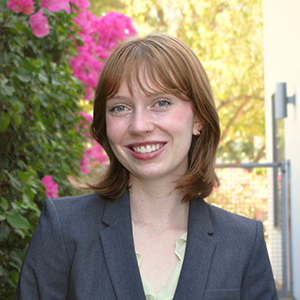
Abby Pearson worked with psychologist and IPR associate Vijay Mittal and postdoctoral researcher Victor Pokorny to study how people at risk for psychosis update their beliefs.
This summer, I worked as a Summer Undergraduate Research Assistant (SURA) for Northwestern's Adolescent Development and Preventive Treatment (ADAPT) research program led by Dr. Vijay Mittal. ADAPT's mission is to form a base of knowledge about adolescents at clinical high risk for psychosis to improve early intervention and develop new treatments.
I helped Dr. Victor Pokorny, a postdoctoral researcher in the lab, collect and analyze electroencephalogram (EEG) data to better understand how those at risk for psychosis update their beliefs. This research aims to shed light on the cognitive origins of psychosis symptoms such as paranoia and other delusions, which are thought to emerge from dysfunctions in updating one's beliefs in the face of new or contrary evidence. Working under Dr. Mittal, I gained many new technical skills such as how to gel an EEG cap, process and epoch EEG data in MATLAB, and fit behavioral data to new computational models. I also gained practical skills such as using small talk to help participants feel more comfortable.
Overall, my SURA experience sparked a greater passion for clinical neuroscience research, and I hope to continue contributing to programs seeking to create meaningful changes in people's lives, such as ADAPT.
Abby Pearson is a physics and psychology double major from Phoenix, Arizona. Outside of class, she plays for Northwestern’s club rugby team, is involved in composting and other campus environmental initiatives, and loves seeing live music in the Chicago area.
Rachel Yoon: Telling the Story of the Opioid Crisis Through Data

Rachel Yoon worked with demographer, epidemiologist, and IPR associate Lori Ann Post at the Buehler Center, developing communications strategies and contributing to data visualization projects.
This summer, I worked under Dr. Lori Ann Post at the Buehler Center, developing communications strategies and contributing to data visualization projects. One of the projects Dr. Post leads is the OD Pulse Dashboard, which tracks the opioid crisis by examining patterns in drug overdose deaths across the United States.
Before this experience, I had never been involved in research, so participating in the Summer Undergraduate Research Assistant (SURA) program helped demystify what research is and how it works. I enjoyed going to the office and seeing how the work of various staff members contributed to Dr. Post's research. Everyone was extremely welcoming, and I felt it was a safe space to ask questions and learn.
For my communications projects, I revamped the Center's newsletter, the Buehler Bulletin, and helped create a new branding direction for social media platforms such as LinkedIn and Instagram. I also launched a faculty video interview series, speaking with core faculty members at the Center and learning more about their stories outside of work.
One of the coolest projects I worked on supported a Department of Justice-funded website focused on opioid crisis data. Working with Geospatial (GIS) Specialist Spencer Cox and other staff members, I helped create state-specific StoryMaps using ArcGIS mapping software. I compiled and visualized data on drug classes, overdose death rates, county-level statistics, and other trends. I enjoyed the opportunity to strengthen my technical skills while also applying my journalism background to the storytelling aspects of the project.
I saw firsthand the impact of the Center's research. Faculty members were regularly recognized for their work, published new research, and were interviewed by media outlets. Because of the Center's emphasis on health policy, many faculty members also create resources that policymakers can use to inform decision-making.
Rachel is a fourth-year student majoring in journalism and Asian American studies. She calls both Queens, New York, and Seoul, South Korea, home. In her free time, she enjoys reading, writing, and exploring different neighborhoods in Chicago.
Published: October 19, 2026.